This site uses Mapbox for interactive maps and Google Analytics to understand site traffic. Both may process your IP address. No advertising or profiling is used.
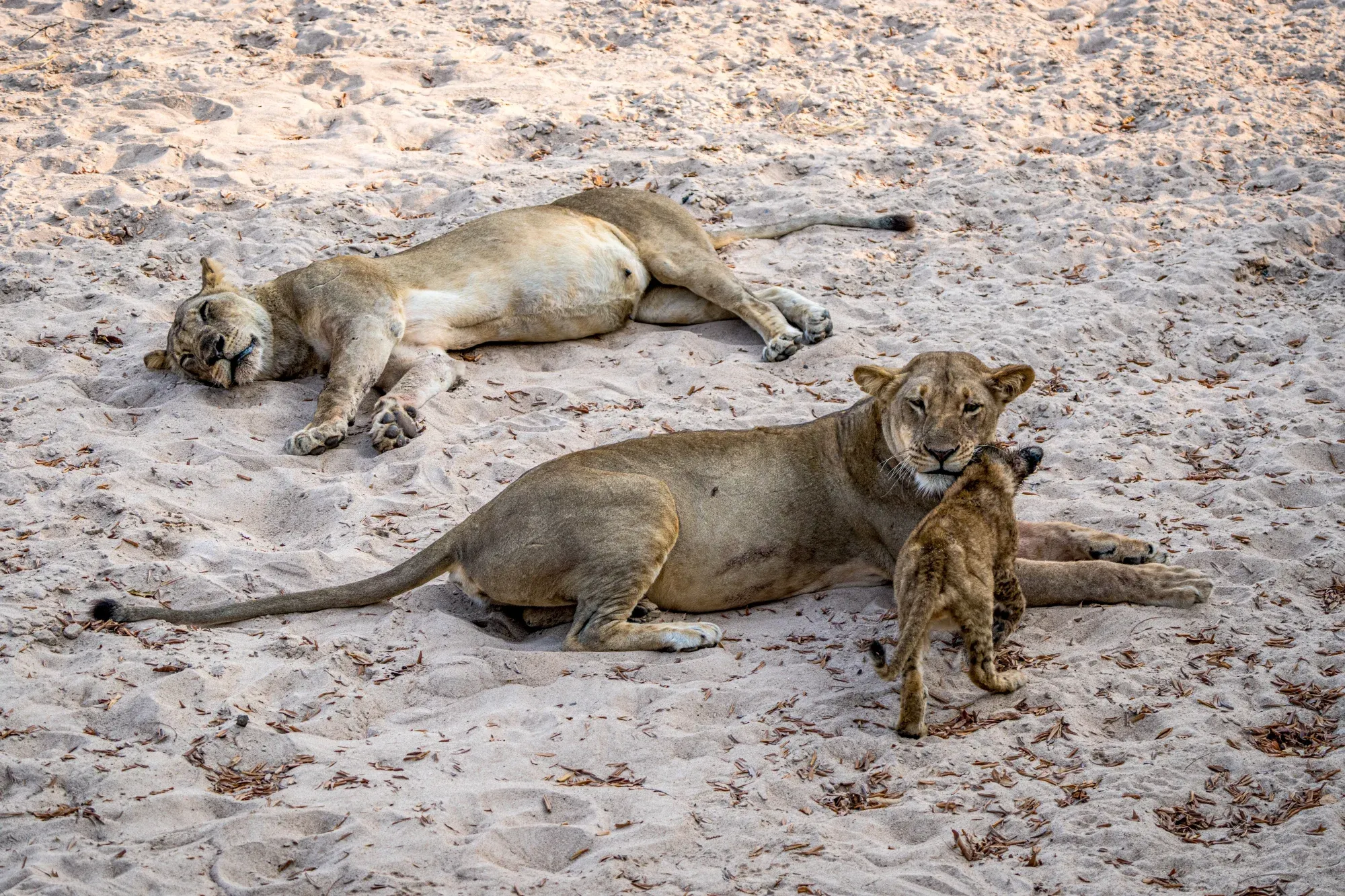
South Luangwa National Park, Zambia
@doms.captures"The man who drinks Zambezi waters must always return to drink again."
Zambia is where African wilderness still operates on its own terms. No mass tourism, no overcrowded roads, no game fences stretching to the horizon, just vast, mostly empty country with some of the finest wildlife on the continent. South Luangwa is widely regarded as one of the greatest national parks in Africa, the birthplace of the walking safari, and the place where painted wild dogs and leopards are seen with a frequency that makes everywhere else feel like a consolation prize.
The Zambezi defines the southern border: one of Africa's great rivers, whose drama builds from the calm canoe safaris of the Lower Zambezi to the full force of Victoria Falls on the border with Zimbabwe. Lake Kariba, the world's largest man-made lake by volume, stretches 280 kilometres across the Zimbabwe border and offers a completely different kind of safari: slow, quiet, and conducted entirely on water, watching game come to the shoreline at dusk from the deck of a houseboat. Doctor speaks the local language, opening doors into Zambian life that most travellers never reach.
Wildlife & Landscapes
South Luangwa National Park
One of the greatest wildlife sanctuaries in Africa and the birthplace of the walking safari. The Luangwa River and its oxbow lagoons concentrate wildlife in extraordinary numbers: leopards are spotted here more reliably than almost anywhere else on the continent, and South Luangwa's painted wild dog population is among the most studied and accessible in Africa. Buffalo, elephant, giraffe, hippo, and crocodile complete a cast that few parks on earth can match.
Lower Zambezi National Park
The Kafue and Zambezi rivers converge here in a landscape of riverine forest, floodplains, and escarpment. Canoe safaris on the Zambezi, paddling past hippos surfacing metres from the bow, fish eagles calling overhead, elephants crossing at dusk, are one of the most intimate wildlife experiences available in Africa. The stretch of river between the park and the Zimbabwean border is some of the most beautiful on the continent.
Lake Kariba
Created by the Kariba Dam in 1958 and straddling the Zambia-Zimbabwe border, this is the world's largest man-made lake by volume, 280 kilometres of drowned Zambezi Valley filled with submerged trees, tiger fishing, and wildlife that comes down to the shoreline without any prompting. Houseboat safaris here are unlike anything else in southern Africa: drift through channels at your own pace, watching elephant and buffalo at the water's edge as the sun drops below the lake.
Zambezi River
Africa's fourth-longest river and the thread connecting South Luangwa, the Lower Zambezi, Lake Kariba, and ultimately Victoria Falls. The Zambezi sustains wildlife at every point along its course: canoe it at the Lower Zambezi, fish for tiger fish in Kariba, watch it narrow and accelerate as it approaches the Falls. Few rivers anywhere in Africa offer this range of experience along a single course.
Culture & Heritage
Lusaka
The capital of Zambia, a city that functions as a hub rather than a destination, but one with a genuine energy and a growing food and arts scene. Eureka Camping Park, on the city's outskirts, is an unlikely pocket of wilderness where zebra and giraffe roam freely between the campsites, a uniquely Zambian introduction to the country before heading into the bush.
Entry requirements
Passport recommendation
For all POA Safaris trips we recommend travelling with a passport valid for at least 6 months after your trip and containing at least 4 blank pages. Longer multi-country itineraries may need more.
Travel insurance
Comprehensive travel insurance is compulsory on every POA Safaris tour, in every country we travel through. See our cancellation policy for what your cover needs to include.
Zambia
Visa-free for many nationalities- Visa
- Depends on nationality. Many are visa-exempt; others can obtain a visa on arrival or an eVisa.EU, UK and US passports: Usually visa-free.
- Typical fee
- Free for many nationalities. Fees apply if you need a visa; the published rates are inconsistent, so check on application.
- Passport validity
- At least 6 months from entry.
- Blank pages
- At least 3 blank pages.
- Yellow fever
- Required if arriving from a yellow-fever-risk country.
- Good to know
- Arrivals by air should hold a return ticket.
Other vaccinations and malaria
Yellow fever is the only vaccination that can affect entry. Anything else is a health question, and what you need depends on your own vaccination history and where you grew up. See your doctor or a travel clinic a few weeks before you leave, as some courses need more than one dose.
Most of these routes pass through malaria areas. Antimalarial tablets usually have to be started before you arrive, so arrange them at home. Pharmacies in the region do sell them over the counter if you lose yours. Repellent, covered arms after dark and the bed net matter as much as the tablets.
Take your route with you to the appointment, as malaria advice varies by area within a country and not only by country. The CDC publishes yellow fever and malaria guidance country by country. See the CDC guidance.
Entry requirements for every country we travel through
Visa fees are indicative, vary by nationality and are subject to change. Visa, vaccination and entry requirements depend on your nationality, travel history and itinerary, and may change without notice. This is a general guide only. Always verify the latest requirements with the relevant immigration authority or embassy before you travel. Last updated: September 2026.
Ready to Go?
Plan Your Zambia Safari
Zambia features as part of our Tri-Nation Explorer: reach out to Doctor on WhatsApp to learn more.
Group departures visiting Zambia
Dates don't work? Want a different route or group size? Doctor builds private itineraries from scratch.
Plan a Private Safari