This site uses Mapbox for interactive maps and Google Analytics to understand site traffic. Both may process your IP address. No advertising or profiling is used.
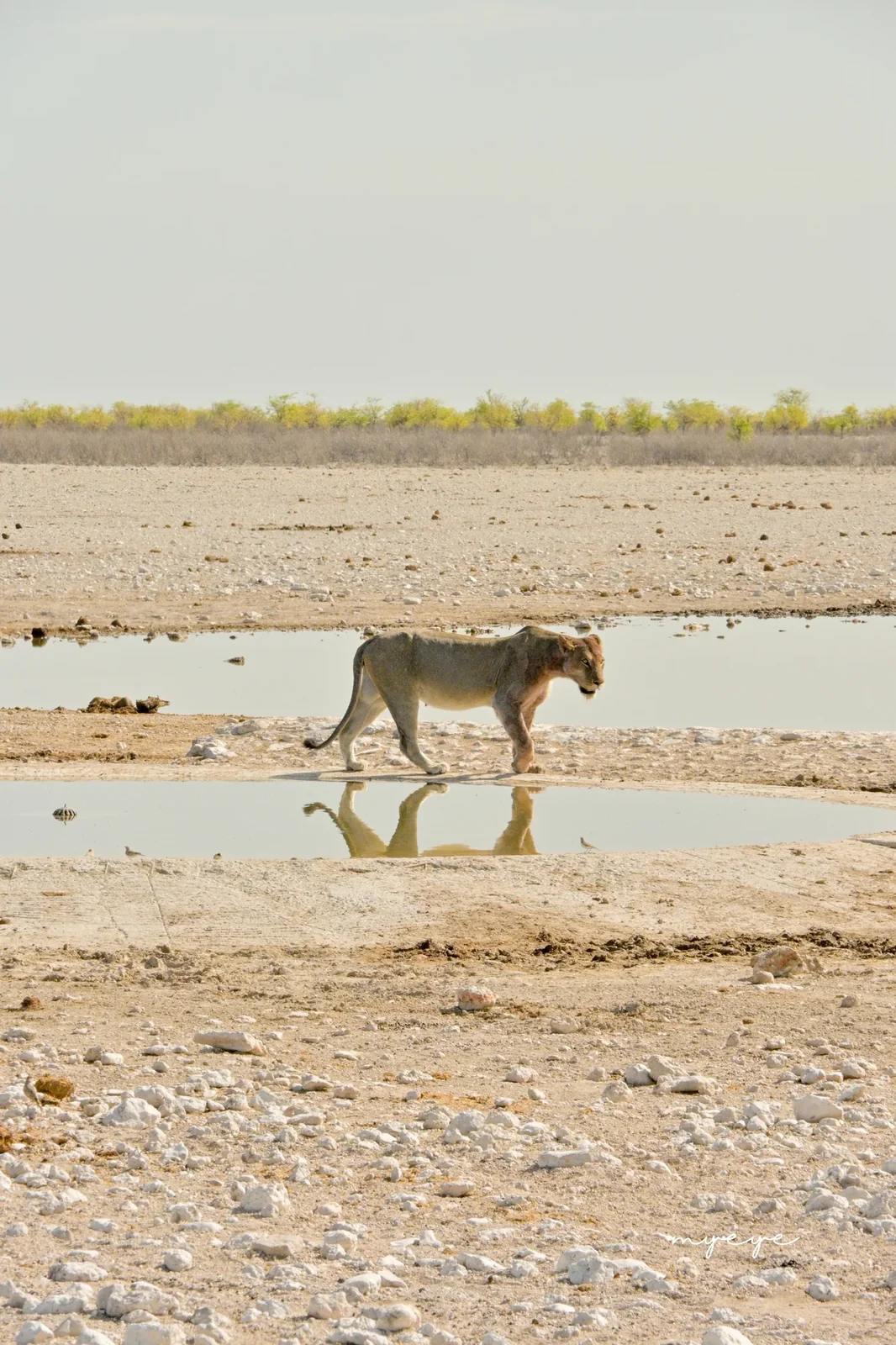
Etosha National Park, Namibia
@my.eye"Muscles relax, the mind expands. The vastness enters into the skin like a shot."
Namibia is Africa at its most otherworldly: ancient red dunes rising from cracked white clay pans, desert-adapted wildlife, and some of the clearest night skies on earth. It is the second least densely populated country in the world, which means you can drive for hours without seeing another vehicle, and stand on a dune at sunrise with nothing around you in any direction.
The landscapes here don't look real, and they keep changing. Sossusvlei's towering dunes, the skeletal trees of Deadvlei, granite inselbergs rising from gravel plains, the fog-shrouded Skeleton Coast, Fish River Canyon, the second-largest canyon in the world. Every time you look out of the window on a long drive, Namibia surprises you with something you weren't expecting. But it's also a country of extraordinary human stories: the Himba of the Kunene, the San of the Kalahari, and the townships of Swakopmund where community-led tourism is done properly.
National Parks & Wildlife
Etosha National Park
One of Africa's great safari parks, built around an enormous white salt pan visible from space. Waterholes draw a constant procession of elephant, lion, rhino, giraffe, and zebra, and the park's floodlit night waterholes produce some of the most extraordinary close-range wildlife encounters on the continent. Etosha is compact enough to cover in a few days yet rich enough to fill a week.
Namib-Naukluft National Park
The oldest desert on earth, stretching 2,000km along the Atlantic coast and encompassing the iconic dune fields of Sossusvlei, the gravel plains of the Namib, and the dramatic Naukluft Mountains. Desert-adapted oryx, springbok, and ostrich move through landscapes that look like they belong on another planet, and at night, with zero light pollution, the Milky Way is a presence you can navigate by.
Waterberg Plateau National Park
A flat-topped sandstone plateau rising dramatically from the surrounding plains, and one of the most historically significant sites in Namibia. It was here in 1904 that the Battle of Waterberg took place, marking the beginning of the genocide of the Herero and Nama people by German colonial forces, an event only officially recognised as genocide in 2021. The plateau carries that weight quietly. Today it also shelters one of Namibia's most important wildlife sanctuaries: buffalo, rhino, roan and sable antelope, and leopard, accessible only on foot or guided game drives.
Adventure & Landscapes
Sossusvlei & Deadvlei
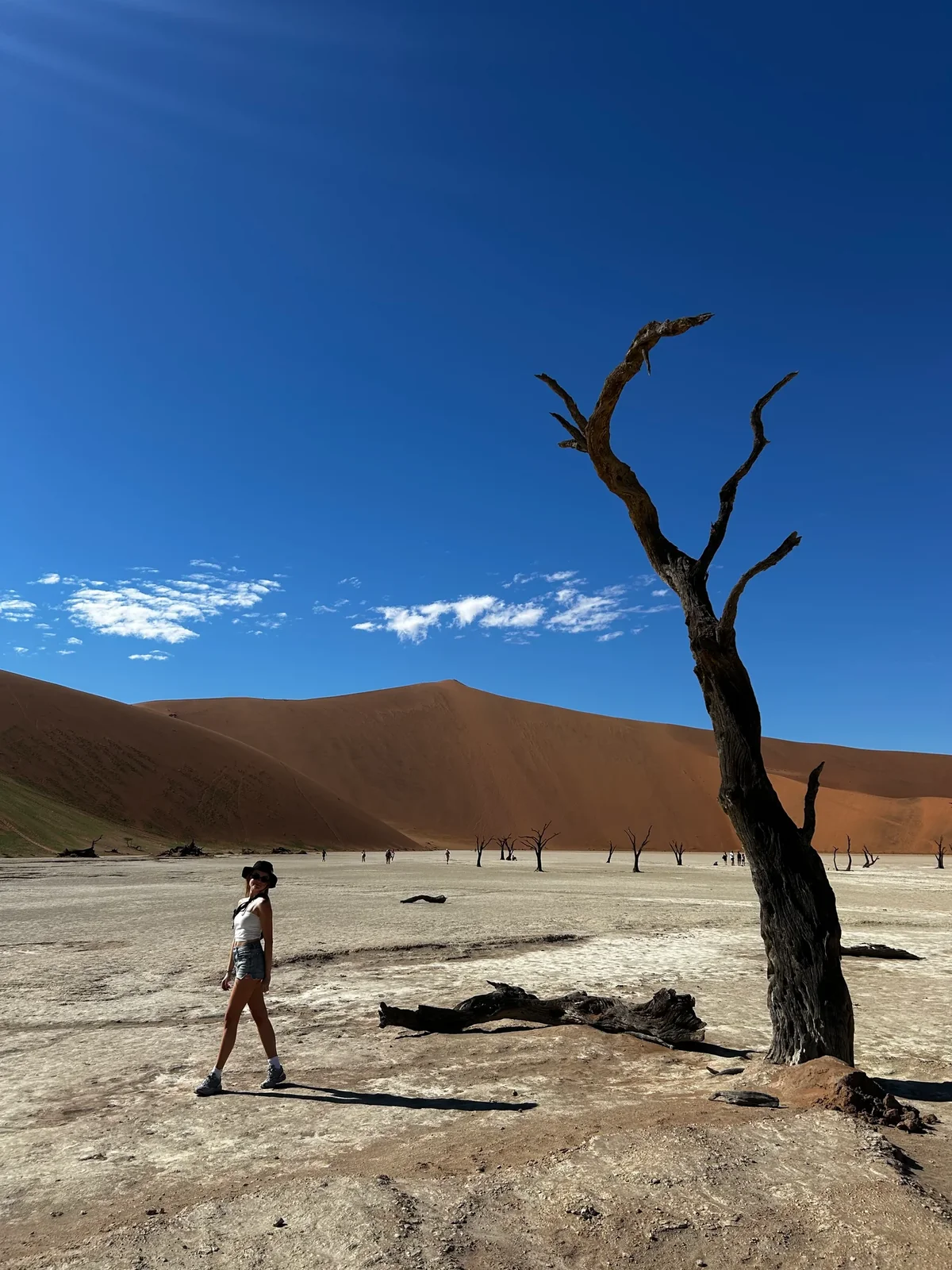
The dunes of Sossusvlei are among the tallest in the world, some exceeding 300 metres, their iron oxide giving them a colour that shifts from burnt orange to deep red as the light changes through the day. At their feet lies Deadvlei: a bleached white clay pan surrounded by dead camel thorn trees, their silhouettes unchanged for over 900 years. No photograph quite captures it.
Skeleton Coast
One of the most remote and atmospheric coastlines on earth, named for the whale bones and shipwrecks that litter its shores. The cold Benguela Current keeps it shrouded in fog while desert-adapted lions, brown hyena, and massive Cape fur seal colonies thrive in the spray. The far north is accessible only by fly-in safari, one of the most exclusive wilderness experiences in Africa.
Caprivi Strip
The narrow corridor of Namibia squeezed between Angola, Zambia, Botswana, and Zimbabwe, a strip of floodplain, permanent rivers, and miombo woodland entirely unlike the rest of the country. The Kavango and Cuando rivers border it north and south; the Bwabwata National Park stretches along its length. For travellers crossing from Etosha toward the Okavango Delta, the Caprivi is a unique and often overlooked transition, a piece of riverine Africa in the middle of a desert country.
Spitzkoppe
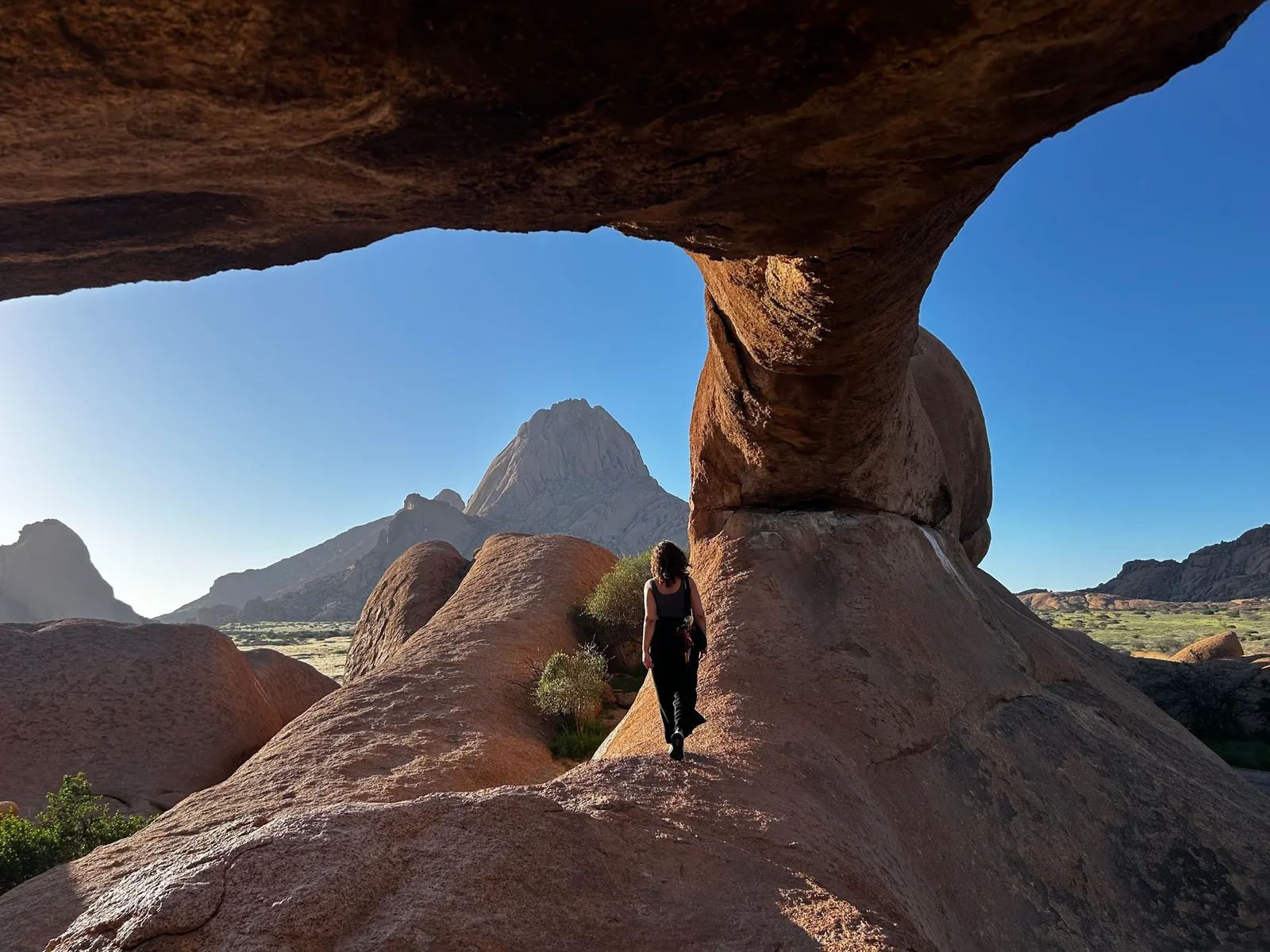
A cluster of ancient granite inselbergs rising from the Namib gravel plains, the tallest peak nicknamed the "Matterhorn of Namibia." San rock art over 2,000 years old covers the boulders at the base, and the surrounding campsites offer some of the finest stargazing in the southern hemisphere. Climbers come from across the world; everyone else comes for the silence.
Fish River Canyon
The second-largest canyon in the world after the Grand Canyon, and the largest in Africa, 160km long, up to 27km wide, and 550 metres deep. The views are genuinely comparable to the Grand Canyon, except there is no one else there. No shuttle buses, no crowds, no gift shops at the rim. Just you, the ancient rock, and a silence so complete it has its own weight. The five-day hiking trail along the canyon floor is one of southern Africa's great wilderness walks, open only in the winter months.
Swakopmund
Namibia's most characterful town: a strange and captivating mix of German colonial architecture, Atlantic fog, and desert adventure. The base for quad biking, sandboarding, and skydiving over the dunes, as well as deep-sea fishing, dolphin and seal cruises, and the unmissable Sandwich Harbour tour: a 4x4 drive through the Namib dunes to the point where the ocean meets the desert, the Atlantic waves crashing against towering walls of sand. After days in the wilderness, its cafés and seafood restaurants feel like a reward.
Walvis Bay
The industrial port town that doubles as one of the finest bird-watching spots in southern Africa. The sheltered lagoon draws over 100,000 flamingos at peak season, a pink haze stretching from the waterline to the horizon, alongside pelicans, cormorants, and exceptional wader diversity. Sunset catamaran cruises on the lagoon combine seal sightings, oysters, and flamingo viewing in a single hour. The drive along the salt road from Swakopmund is half the experience.
Sandwich Harbour
South of Walvis Bay, reachable only by 4x4 and only outside high tide, this is the point where the Namib's dunes plunge straight into the Atlantic: towering walls of sand meeting breaking surf with no beach in between. The lagoon behind the dunes is an important wetland for migratory birds, and the drive down the coast and up onto the dune faces is as much the experience as the destination itself. One of the most photographed, least accessible views in Namibia.
Cape Cross Seal Reserve
One of the largest Cape fur seal colonies in the world: over 100,000 animals at peak season, packed onto a narrow Skeleton Coast beach with a sound and smell you'll carry with you for days. The seals breed here from November to December, but the colony is present year-round. The ruins of the original stone cross erected by the Portuguese explorer Diogo Cão in 1486, one of the oldest European monuments in sub-Saharan Africa, stand at the reserve entrance.
Brandberg Mountain
Namibia's highest peak (2,573m) rises dramatically from the surrounding gravel plains in Damaraland, a sacred massif to the local Damara and Himba people. The mountain is most famous for the White Lady rock painting, a 2,000-year-old San masterpiece depicting a human figure in white amid a hunting scene. The hike to the site takes around two hours through a dry riverbed filled with fig trees and birdlife.
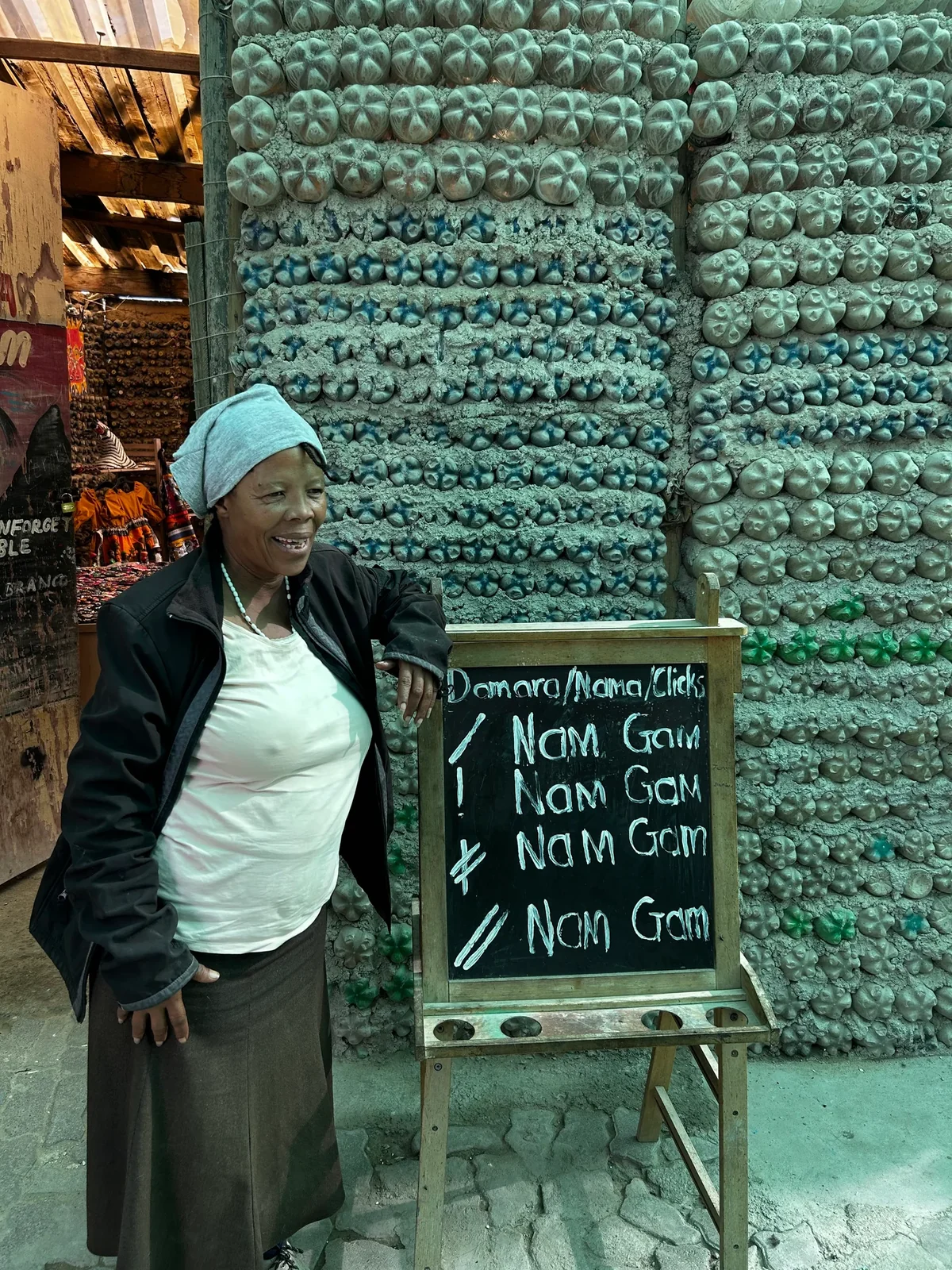
Culture & Heritage
Himba & San Cultural Experiences
Namibia is home to some of the last truly traditional communities in Africa. The semi-nomadic Himba of the Kunene region, recognisable by their ochre skin and intricate hairstyles, maintain a way of life largely unchanged for centuries. The San of the Kalahari are the continent's oldest indigenous people, with a hunter-gatherer culture and knowledge of the desert that goes back more than 70,000 years.
Mondesa Township Tour
The township of Mondesa on the outskirts of Swakopmund offers one of the most honest and human encounters in Namibia: guided walks through a community that grew from the forced removals of the apartheid era, meeting local families, visiting a traditional healer, and eating home-cooked food. A necessary counterpoint to the desert landscapes, and one of the most memorable parts of any Namibia trip.
Windhoek
Namibia's compact, orderly capital sits in a valley in the central highlands: a blend of German colonial buildings, modern African city life, and excellent restaurants. The Christuskirche, the Independence Museum, and the Craft Centre are worth a morning; the city is a comfortable gateway to everything Namibia has to offer and a genuine place in its own right.
Entry requirements
Passport recommendation
For all POA Safaris trips we recommend travelling with a passport valid for at least 6 months after your trip and containing at least 4 blank pages. Longer multi-country itineraries may need more.
Travel insurance
Comprehensive travel insurance is compulsory on every POA Safaris tour, in every country we travel through. See our cancellation policy for what your cover needs to include.
Namibia
Visa on Arrival or eVisa for many nationalities- Visa
- Depends on nationality. Many who previously travelled visa-free now need a Visa on Arrival, which can also be applied for online beforehand. Others remain visa-exempt.EU, UK and US passports: Visa required, available on arrival or online in advance.
- Typical fee
- From approx. US$70. The official fee is N$1,200, so the dollar figure moves with the rate.
- Passport validity
- At least 6 months from entry.
- Blank pages
- At least 3 blank pages.
- Yellow fever
- Required if arriving from a yellow-fever-risk country.
- Good to know
- A return or onward ticket is required.
Other vaccinations and malaria
Yellow fever is the only vaccination that can affect entry. Anything else is a health question, and what you need depends on your own vaccination history and where you grew up. See your doctor or a travel clinic a few weeks before you leave, as some courses need more than one dose.
Most of these routes pass through malaria areas. Antimalarial tablets usually have to be started before you arrive, so arrange them at home. Pharmacies in the region do sell them over the counter if you lose yours. Repellent, covered arms after dark and the bed net matter as much as the tablets.
Take your route with you to the appointment, as malaria advice varies by area within a country and not only by country. The CDC publishes yellow fever and malaria guidance country by country. See the CDC guidance.
Entry requirements for every country we travel through
Visa fees are indicative, vary by nationality and are subject to change. Visa, vaccination and entry requirements depend on your nationality, travel history and itinerary, and may change without notice. This is a general guide only. Always verify the latest requirements with the relevant immigration authority or embassy before you travel. Last updated: September 2026.
Ready to Go?
Plan Your Namibia Safari
Reach out to Doctor on WhatsApp: he knows Namibia well and will put together something worth the journey.
Group departures visiting Namibia
Dates don't work? Want a different route or group size? Doctor builds private itineraries from scratch.
Plan a Private Safari